
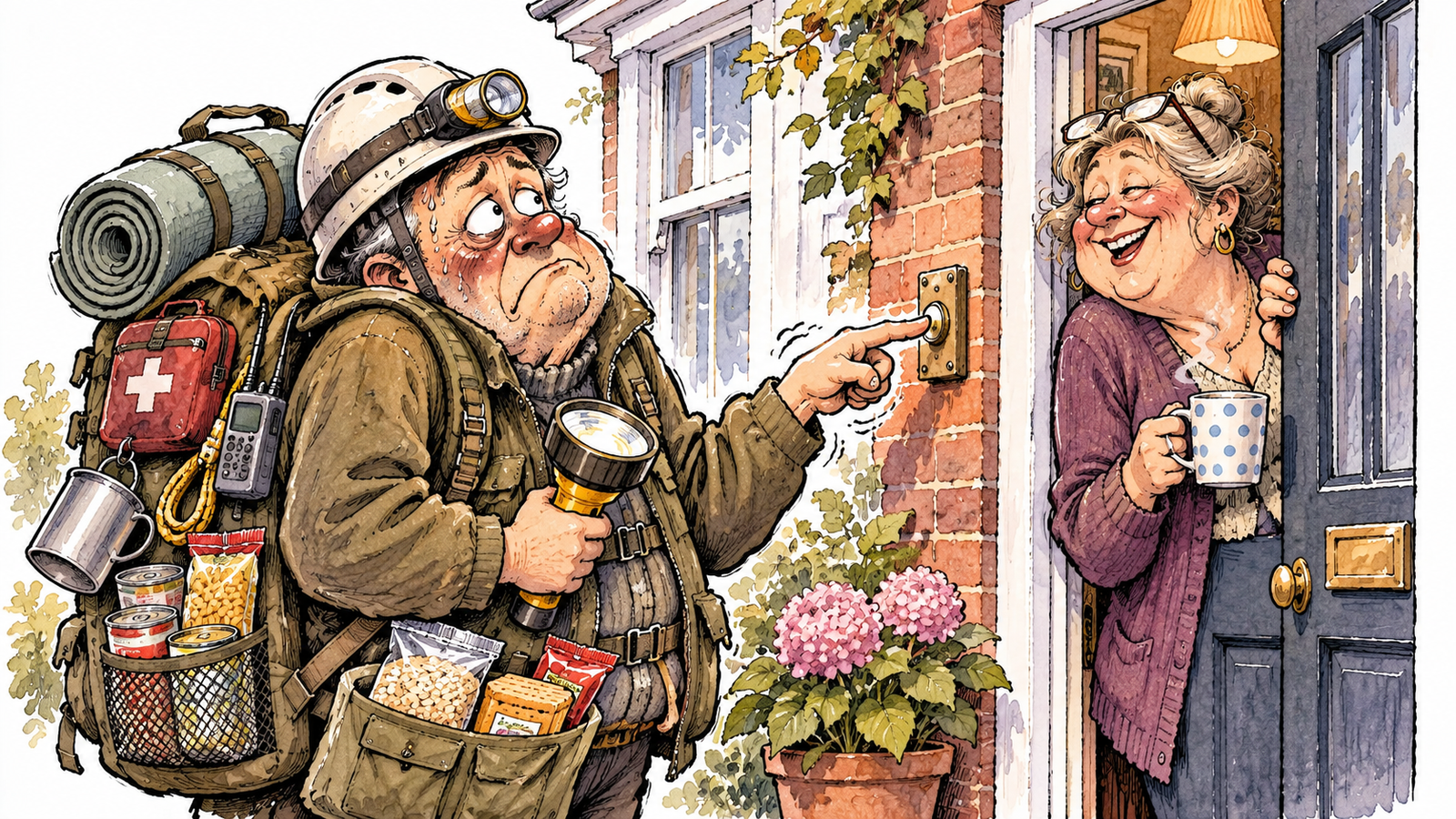
A British household has assembled enough tinned food, batteries and bottled water to survive a power cut. Unfortunately, the final stage of preparation involves an activity for which the family has received no formal training: speaking to the neighbours.
The government’s Be Ready campaign, launched in October, encourages households to prepare gradually for three days of disruption. Its guidance covers emergency supplies, written contact details, household plans and arrangements to check on neighbours. A weekend article in The Independent highlighted the importance of agreeing a practical plan rather than relying on supplies alone.
The operation at number twelve
In our imaginary suburban street, a man stands outside his neighbour’s front door with a carefully rehearsed opening sentence. He has lived next door for nine years and knows the precise time the neighbour puts his bins out, but not his first name.
He considers writing a note instead. This would preserve the traditional British distinction between being friendly and actually having a conversation.
Eventually they agree to exchange telephone numbers, check on each other during a power cut and make sure the elderly resident at the end of the street is all right.
A remarkably low-tech solution
Emergency supplies are useful, but so are people who know where you are and what help you might need. The official guidance explicitly recommends making plans with family and neighbours, and keeping essential numbers on paper in case electronic devices are unavailable.
The two neighbours have now agreed on a plan. Their next meeting, provisionally scheduled for spring, may even involve discussing something other than the hedge.
Britain may yet discover that the most advanced piece of emergency equipment is a doorbell that somebody is willing to ring.
Sources: UK Government, Be Ready guidance · The Independent / The Conversation, 28 November · British Red Cross, emergency preparedness