
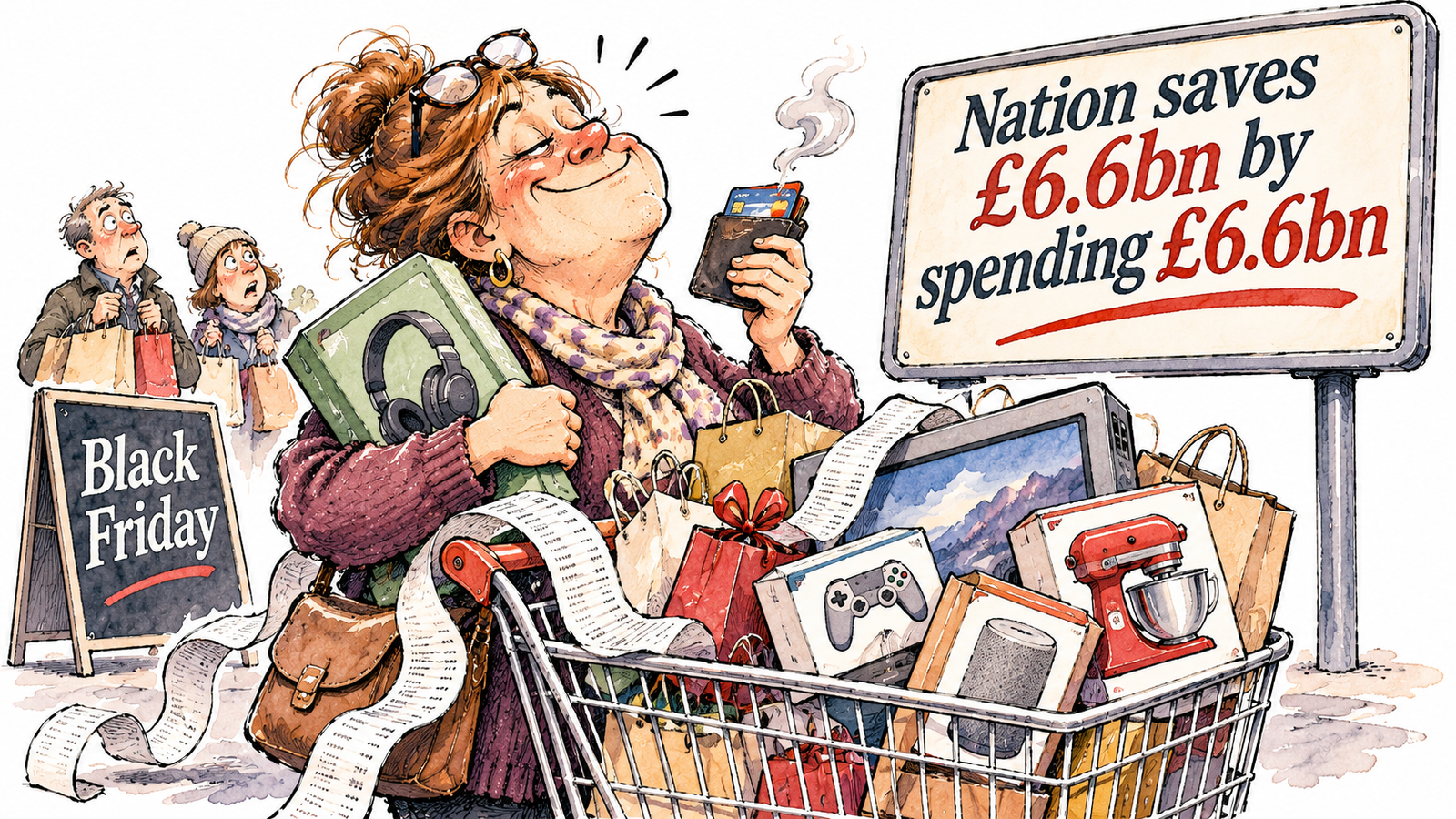
Britain has begun the weekend practising its most advanced form of household accounting: buying something for £80 and coming home £40 better off. Never mind that the item wasn’t on the shopping list and the £40 exists exclusively on a red sticker.
PwC’s latest forecast puts UK Black Friday spending at £6.6 billion, with participating shoppers expecting to spend an average of £235. The figures are projections, rather than a final tally, but they suggest the country’s appetite for a bargain has recovered rather more convincingly than its consumer confidence.
The economics of saving
In one entirely imaginary household, a man has ordered an air fryer because it was £30 cheaper than the air fryer he didn’t want on Thursday. His wife has responded by saving £60 on a coffee machine. They have agreed to celebrate their combined £90 saving by ordering a takeaway, as both appliances are due to arrive on Tuesday.
The race to spend less
The truly dedicated bargain hunter no longer checks whether a purchase is affordable. He checks whether it is urgently unaffordable. A countdown clock transforms a perfectly ordinary decision about a toaster into the final seconds of a bomb disposal operation.
The genius of Black Friday is that the more you buy, the more opportunities you have to announce how much you have saved. By Sunday evening a sufficiently determined household could be bankrupt and absolutely thrilled with its financial discipline.
Monday brings Cyber Monday, a useful opportunity to buy the storage solutions for everything that arrived on Saturday.
Sources: PwC UK spending forecast, 20 November 2026 · Which? Black Friday price tracking