
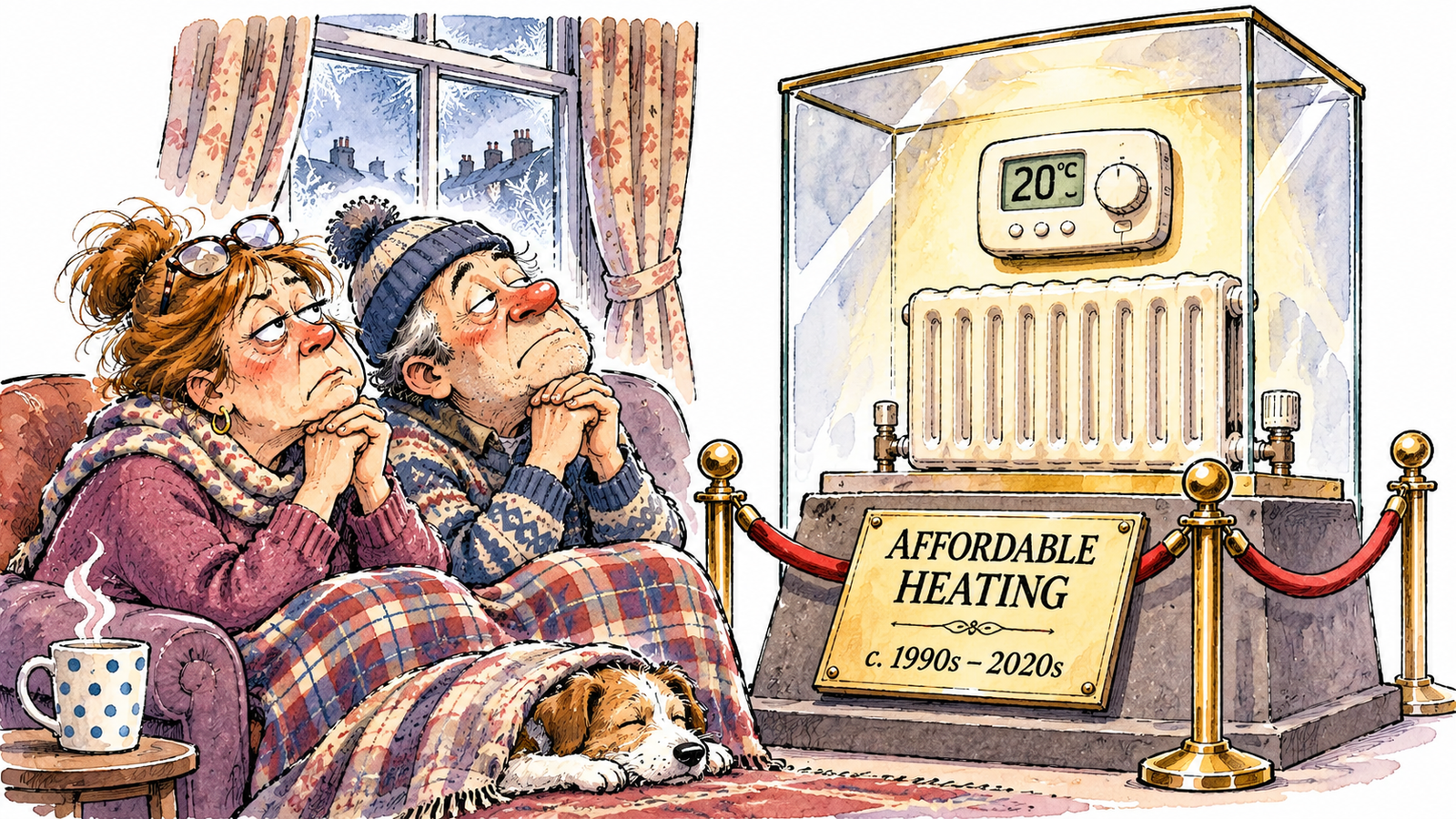
Ofgem has announced that the energy price cap will rise by 26 per cent in January, prompting British households to reconsider whether central heating is a utility or a rather ambitious lifestyle choice.
For a typical dual-fuel household paying by direct debit, the annualised benchmark will rise from £1,723 to £2,166 for the January to March 2027 cap period. Actual bills depend on consumption, because even the word ‘cap’ has been forced to take on additional responsibilities. Ofgem attributes the increase to higher international gas prices.
A family heirloom
In a fictional semi-detached house, the thermostat has been promoted from a functional appliance to a family heirloom. It is now dusted on Sundays, admired by visitors and occasionally pointed at by Grandad, who remembers turning it all the way up to 21 without first consulting a spreadsheet.
A new domestic heating strategy
The family has developed a new heating strategy involving two jumpers, a dressing gown and a vigorous argument about who left the kitchen door open. A third jumper is available subject to a satisfactory affordability assessment.
Visitors will be offered a hot drink, provided they agree to remain in the kitchen until the residual heat from the kettle has been fully utilised. Anyone asking whether the house is always this cold will be told it is actually quite mild for the time of year, which is British for ‘please stop talking’.
Meanwhile, the cat has secured the warmest chair in the house and is refusing to surrender it without a standing charge.
Sources: Ofgem energy price cap announcement, 25 November 2026 · Ofgem: January to March 2027 price cap changes